
EXCLUSIVE: Pentagon, Lockheed weigh multi-year F-35 production, sustainment deal
One source familiar with the negotiations expressed doubt that Lockheed "can successfully propose something that demonstrates long-term cost savings."
One source familiar with the negotiations expressed doubt that Lockheed "can successfully propose something that demonstrates long-term cost savings."
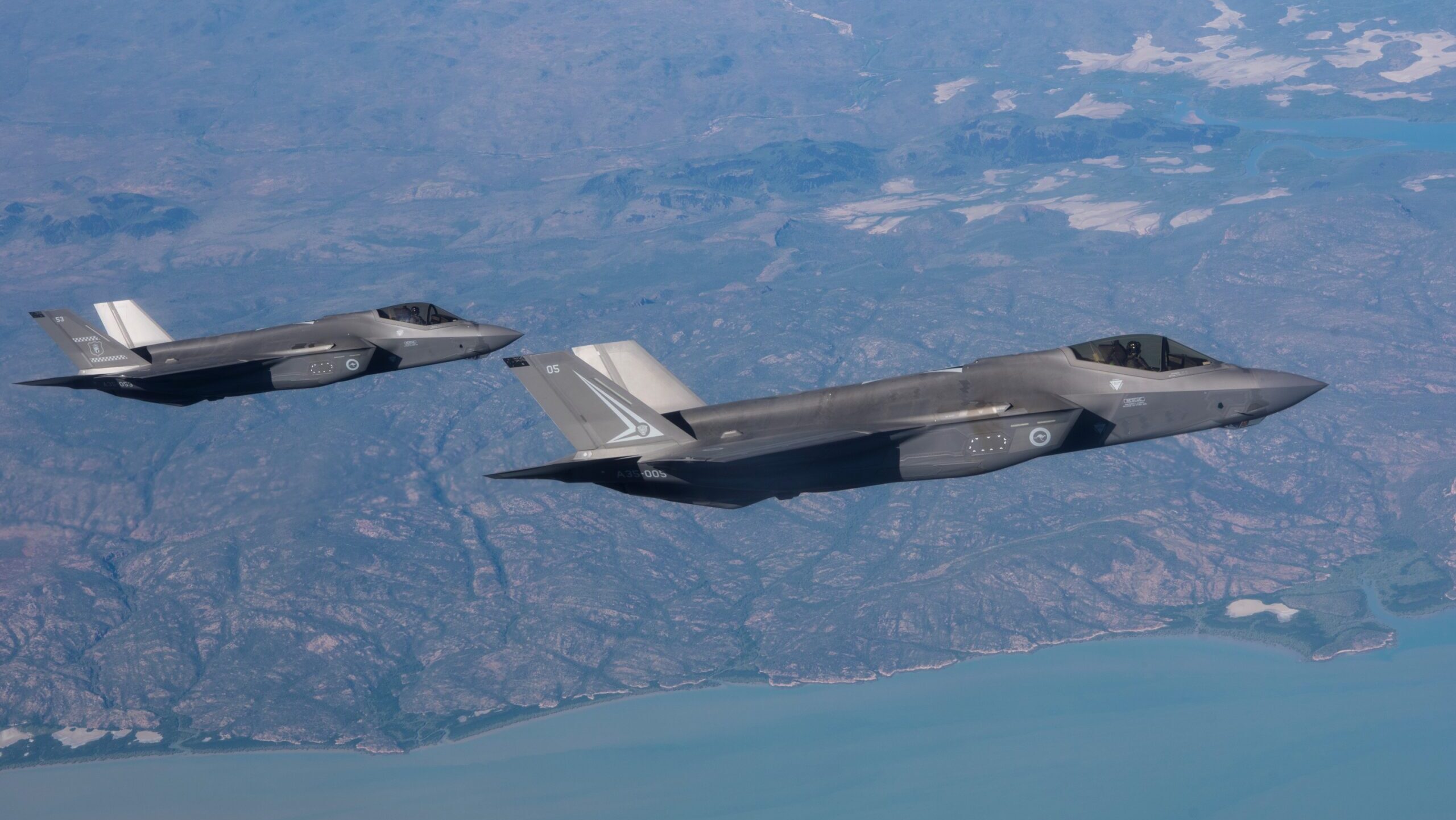
After parts reportedly made their way to Hong Kong, a Lockheed Martin spokesperson told Breaking Defense that the missing components “are unserviceable and deemed low risk for exploitation."


Decentralized Embodied Collaborative intelligence enables better reconnaissance, logistics and combat capabilities.

“It means that the design is solid. It means that we're ready to move forward from an industrial base as well,” Jill Albertelli, the president of Pratt & Whitney's military engines business, told Breaking Defense.
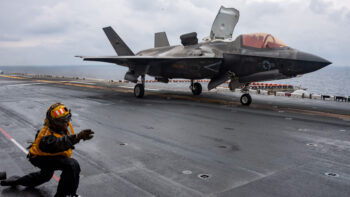
Compared to recent contracts, the average flyaway cost of an F-35A and F-35B rose by over 11 percent, while the price of an F-35C climbed over 8 percent, according to figures supplied by the F-35 Joint Program Office.
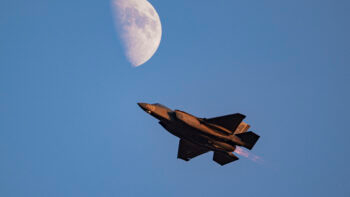
The F-35’s full mission capable rate fell to to 25 percent in FY25, the government watchdog found.
A contract award covers engines for two upcoming batches of F-35 Joint Strike Fighter production.

APKWS® laser‑guidance kit provides reliable precision‑guided munitions across missions and platforms, delivered quickly to meet evolving operational demands.
Rep. Rob Wittman told Breaking Defense that while he expected issues with the new APG-85 radar to eventually be resolved, in the interim the US military will be left with “lots of aircraft out there, but not ones that are ready to go to the fight.”

The delivery total greatly exceeds a previous record of 142, boosted by a backlog of undelivered jets that had to be held in storage.
The $24.3 billion deal covers 148 aircraft each in production lots 18 and 19, closing out negotiations that have stretched since 2023.

The rising costs have led to a row between Switzerland and the US, as Bern faces a $610 million increase for its order of 36 F-35As, a defense official told Breaking Defense.

A commitment to long-term operational value.

The carrier-capable F-35C crashed near Naval Air Station Lemoore in central California Wednesday evening, according to a US Navy spokesperson.

The company is examining “all offers that’re out on the market today to make that decision, so it’s not going to be a quick choice,” Lockheed’s F-35 program manager Chauncey McIntosh told Breaking Defense.
The jet was participating in a training event and crashed while coming in for landing at Eielson Air Force Base near Fairbanks, Alaska, according to Col. Paul Townsend, commander of the 354th Fighter Wing.
The so-called “handshake deal” precedes a formal contract finalization, which Lockheed expects will occur before the end of 2024.